Siberian cat care: coat checks, company and feeding
Learn how to care for your Siberian cat’s coat, food and surroundings, and show a cat sitter how to follow their usual routine.
Updated on
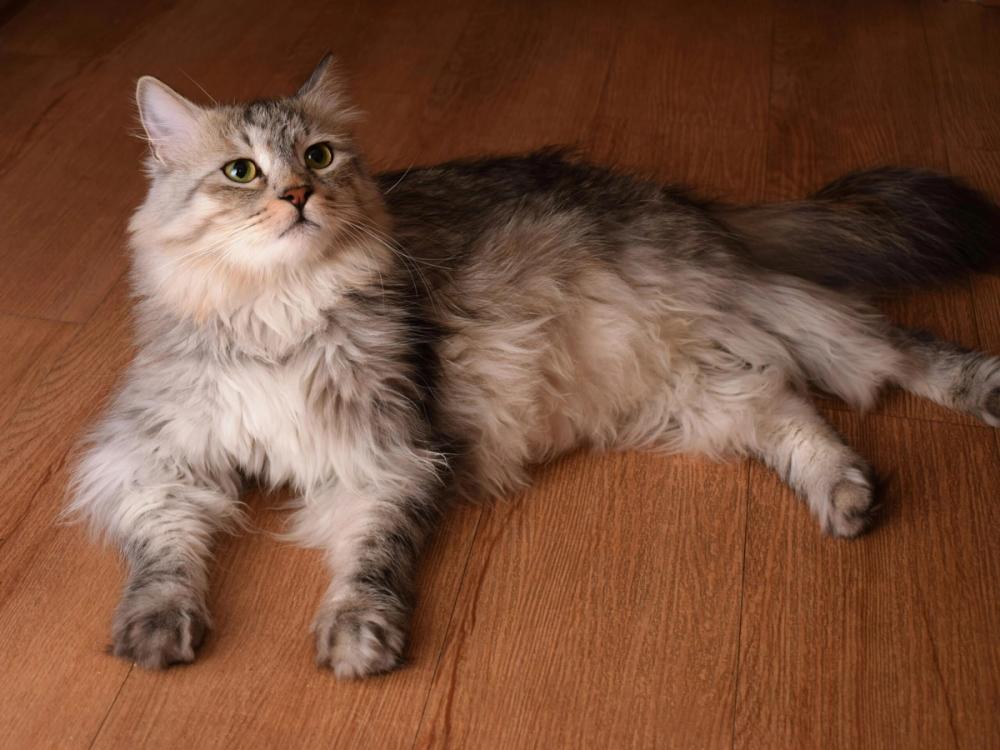
Breed at a glance
Our editors rate each trait from 1 (low) to 5 (high). These are general breed characteristics, not reviews, and every pet is different.
- Build
- Large and muscular
- Coat
- Dense, with three layers of hair
Exercise needs
The CFA describes a curious, generally relaxed cat. Provide daily opportunities for play and exploration alongside quiet places.
Grooming
Grooming needs vary greatly between cats. Regularly check the underside, tail and longer hair around the hind legs for tangles.
Playfulness
Use familiar play to engage your cat’s curiosity. A calm temperament does not remove the need for daily activity.
Feeding & daily routine
Choose complete cat food for the appropriate life stage. Use the packaging guide as a starting point and consider body condition, activity and individual needs. A sturdy build or thick coat does not automatically call for unlimited food. Include treats and give the sitter the same measured portions and clean drinking water.
This breed on Petbnb
Petbnb bookings and sitters in the Netherlands.
- Paid bookings
- 44
- Sitters with breed experience
- 23
Last updated
The booking total includes paid bookings, as well as completed and reviewed stays or visits. It doesn’t mean every stay or visit has already taken place. Sitter counts and city rankings are based on the breeds sitters list on their profiles, rather than their booking history. This experience is self-reported; check availability for your dates.
Find a sitter who knows the breed
See which cities have the most sitters who list this breed on their profile. Arrange a meet and greet to talk about their experience and your pet’s needs.
- Siberian sitters in Amsterdam3 sitters with breed experience
- Siberian sitters in Nijmegen3 sitters with breed experience
- Siberian sitters in 's-Gravenhage2 sitters with breed experience
- Siberian sitters in Eindhoven2 sitters with breed experience
- Siberian sitters in Almere1 sitters with breed experience
- Siberian sitters in Delft1 sitters with breed experience
The Siberian cat has a sturdy build and a dense coat that changes with the seasons. A full coat does not tell you exactly how much combing your cat needs, however. Some coats stay loose and airy more easily than others. Regularly feeling and checking the coat is therefore more useful than blindly following a fixed schedule.
The Cat Fanciers’ Association describes the Siberian as sociable and curious, taking an interest in home life. This calls for room to watch what is happening and somewhere to rest undisturbed. Follow your cat’s behaviour, including during the meet and greet with a sitter.
Did you know? The coat has three layers of hair
The CFA identifies a dense, three-layered coat as a feature of the Siberian. Stroking the surface alone will not tell you what is happening deeper in the coat. Make a simple grooming card with the sitter: areas to check, tools to use and when to stop. This turns a complicated coat description into a manageable routine for your cat.
Check the places where tangles develop
The CFA emphasises that Siberians’ grooming needs vary considerably. Calmly check the underside, tail and longer hair around the hind legs several times a week for early tangles. Then adapt combing to what you find and what your cat knows.
Show a sitter the comb you use and your usual sequence. Divide grooming into shorter sessions if your cat only wants brief handling. Do not pull at tight mats or attempt to cut close to the skin. Seek help when the coat cannot be groomed comfortably.
According to the CFA, the coat is usually denser in colder months than in summer. Pass on the current routine, not only instructions from a previous stay. Age and health can also affect how much grooming your cat can manage independently.
Give curiosity a safe outlet
Cupboards, bags and other new items can interest a Siberian cat. Tell the sitter where your cat likes to look or hide. Do not leave dangerous or restricted spaces open, and check where the cat is before closing a cupboard or room.
Provide sturdy scratching places, high resting spots your cat can reach comfortably and familiar games too. Being curious does not mean your cat needs constant activity. Give them space to choose between contact and rest. For variety at home, use our tips for a happy indoor cat.
Match portions to your cat’s body condition
Choose complete cat food for the appropriate life stage. The feeding guide on the packaging is a starting point, but body condition, activity and individual needs determine whether the portion is right. A sturdy build or dense coat is no reason for unlimited feeding. Ask your vet if you’re unsure.
Keep track of treats and food used in games too. Measured portions and clear mealtimes help the sitter. Provide clean drinking water and explain whether your cat eats with others or uses a separate place.
Let the sitter experience a normal day
Agree how the sitter offers contact, which rooms are accessible and where your cat usually retreats. A sociable breed does not mean a stranger can immediately pick them up or comb them extensively. Show what your cat enjoys during the meet and greet.
- Where do tangles first develop on your cat, and may the sitter touch those areas?
- Which grooming tasks can comfortably fit into one short session?
- Does your cat like hiding in a cupboard or bag the sitter should check?
- Do they like staying nearby during ordinary tasks, or prefer another room?
Read more about preparing cat sitting at home while you are on holiday.
Sources
- Cat Fanciers’ Association: Siberian — sturdy build, seasonal coat, variation in grooming needs and curious, sociable behaviour.
- LICG: a cat-friendly home — safe layout, rest, play and scratching places.
- LICG: feeding your cat — general guidance — life stage and individual portions.
- LICG: feeding your cat — guidelines and quantities — complete food and energy needs.